
At a glance
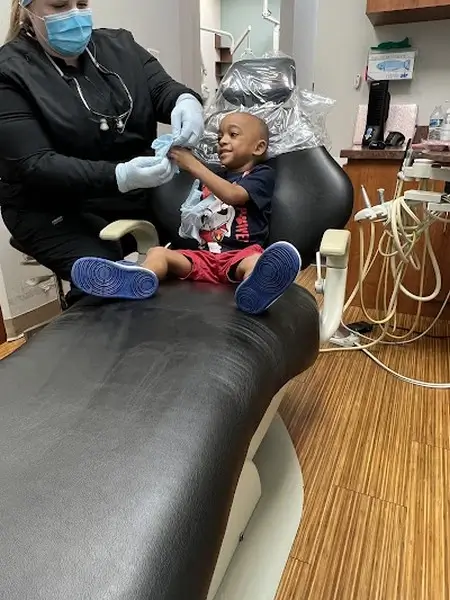
A fluoride treatment is a varnish painted onto your teeth to strengthen enamel and help prevent cavities. It takes a few minutes at the end of a cleaning, and you wait about 30 minutes before eating.
We offer it to children from the first tooth (around age 1) and to adults with a higher cavity risk. It’s part of our preventive dentistry. It’s done at your regular visit, including on Saturdays.
| Item | Details |
|---|---|
| Visits | Done at your regular checkup and cleaning |
| Time | A few minutes |
| Numbing | Not needed |
| Who it’s for | Children from the first tooth; teens; adults with dry mouth, receding gums or frequent cavities |
| Price | Written estimate before treatment (see dental prices) |
| Insurance | Most PPO plans (benefits checked before your visit), Medicare Advantage plans with dental benefits, and Texas Medicaid/CHIP for children (DentaQuest, MCNA, UHC Dental) |
| Saturday appointments | Yes, Saturdays 9am–3pm, plus Tuesday and Wednesday |
Do you need a fluoride treatment?
Fluoride toothpaste is the foundation, but some people need extra protection. A treatment makes sense if:
- You’re a parent of a young child, from the first tooth onward
- You or your child have had cavities in the last few years
- Your mouth often feels dry, which is common with many medications
- Your gums have receded and exposed the softer root surfaces
- Teeth are sensitive, or we see early soft spots (white spots) in the enamel
- You have a lot of crowns or fillings, where new decay can start at the edges
- You snack or sip sugary drinks often
What happens at your visit?
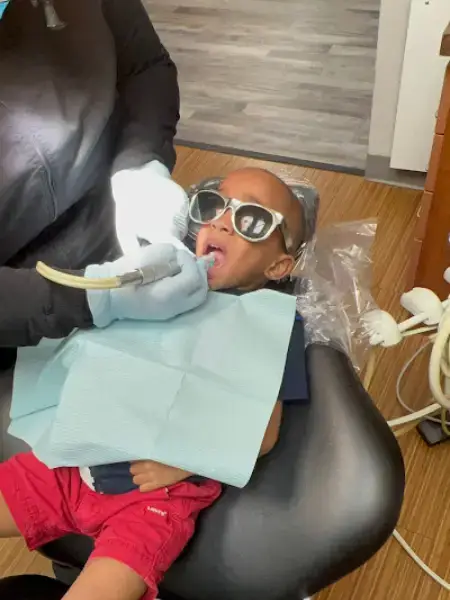
- Your teeth are cleaned first, so the fluoride can reach the enamel.
- The teeth are dried with air.
- A thin, sticky varnish is painted onto the teeth with a small brush. It sets when it touches saliva.
- You can close your mouth and go. Teeth may feel a little coated or look slightly yellow until you brush.
Cost, insurance and financing
Fluoride is not on our published price list, so we give you a written estimate before treatment. Many PPO plans cover fluoride for children as part of preventive care, and some cover it for adults; we check your benefits first.
We work with most PPO plans and check your benefits before your visit, so you know what is covered. We also accept Medicare Advantage plans that include dental benefits. For children, we accept Texas Medicaid and CHIP through DentaQuest, MCNA and UHC Dental; we are not in network for adult Medicaid. Original Medicare (Parts A and B) does not cover routine dental care. See insurance we accept.
We accept Cherry, Sunbit and CareCredit for patient financing (see financing options), and you can use an FSA or HSA card for dental treatment.
Recovery and aftercare
- Wait about 30 minutes before eating or drinking.
- For the rest of the day, choose soft, lukewarm foods and skip hot drinks, alcohol and hard or crunchy foods.
- Hold off on brushing and flossing for at least 4–6 hours, or until the next morning if we tell you to.
- The film brushes away the next time you brush.
More detail is in our guide on how soon you can eat after fluoride.
Alternatives
| Option | Best for | What to know |
|---|---|---|
| In-office fluoride varnish | Kids and higher-risk adults | Done at your cleaning; stays on teeth for hours |
| Fluoride toothpaste | Everyone | Brush twice a day; use a rice-grain smear for kids under 3 and a pea-sized amount for ages 3–6 |
| Prescription-strength toothpaste or rinse | Adults with high cavity risk | We may suggest it along with varnish |
| Dental sealants | Deep grooves in back teeth | Works alongside fluoride, not instead of it |
When to call us
Call us if you see white, brown or dark spots on your child’s teeth, a tooth is sensitive to sweets or cold, or your mouth often feels dry. Call (832) 612-2831 — we’re open Tuesday, Wednesday and Saturday, 9am–3pm.
Why patients in Richmond choose us
- Family care for children from the first tooth, including fillings in our office, with Texas Medicaid and CHIP for kids accepted through DentaQuest, MCNA and UHC Dental (see our Medicaid guide)
- Saturday appointments from 9am to 3pm, plus Tuesday and Wednesday hours (Saturday dentist in Richmond)
- Published self-pay prices for new-patient exams, and insurance benefits checked before your visit
- Two dentists, Dr. Arpitkumar Patel and Dr. Harsh Patel, and a team that speaks English, Spanish, Gujarati and Hindi
Related guides
- How soon can you eat after fluoride treatment?
- How to fix an early cavity before it gets worse
- Dental sealants for kids: how they protect teeth from decay
- Senior dentistry: what your smile needs as you get older
Frequently asked questions
Yes. Fluoride varnish is applied in small, measured amounts and is recommended by the American Dental Association for children, starting when the first tooth comes in.
No. The varnish is painted on with a small brush. Some kids don’t love the sticky feeling, but there’s nothing sharp and no numbing.
Many children get it at each checkup, about every six months. Adults at higher risk may benefit at each cleaning. We’ll suggest a schedule based on your cavity risk.
Fluoride can help harden very early soft spots in the enamel before they become a hole. Once a cavity has formed, it needs a filling.
Not always. Adults with dry mouth, receding gums or frequent cavities often benefit from the extra protection. Others may not need it.